
Local GuidesPrevention Tips
Spring thaw water damage risks for Jefferson City homeowners
Frozen ground, saturated clay soil, and 40-degree swings make March the wettest month for Jefferson City basements. Here's what fails first and how to stop it.
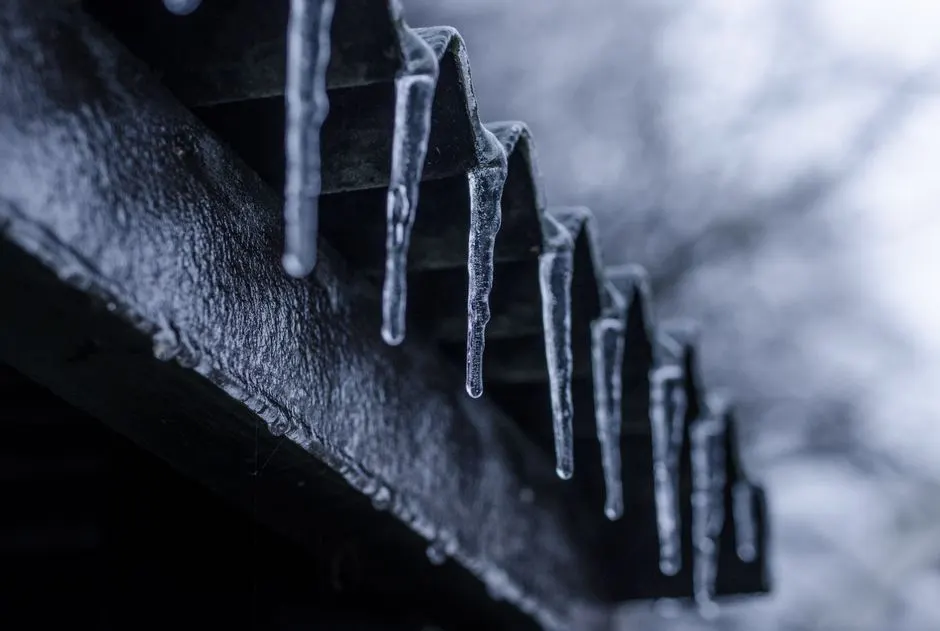
Spring thaw water damage risks Jefferson City MO homeowners face are almost entirely predictable: frozen ground blocks infiltration, snowmelt pools against foundations, and hydrostatic pressure pushes water through the path of least resistance - usually a basement floor drain, a stairwell, or a hairline crack in a 1950s block wall. The damage happens in the first 48 hours of the first real thaw, usually in early to mid-March, and it almost always starts at night. What follows is what we see on calls across Cole County every spring, what it costs to fix, and how to keep it out of your basement.
Why spring thaw hits Jefferson City basements harder than anywhere else
Jefferson City sits on a mix of clay-heavy loam and shallow limestone, and that combination is brutal during a thaw. Clay soil expands when it freezes, then releases water slowly as it thaws - sometimes over two or three weeks. Limestone underneath doesn't absorb anything. So the meltwater has nowhere to go but down your foundation wall.
Add the Missouri River valley's freeze-thaw cycle - 55°F one afternoon, 26°F the next morning - and you get soil that cracks, heaves, and re-saturates repeatedly. We see this pattern in older neighborhoods like Old Munichburg and the blocks around Capitol Avenue, where 80- to 100-year-old stone and block foundations were never designed for the volume of water a modern subdivision produces uphill.
Spring thaw water damage risks Jefferson City MO residents should treat as a category, not a single event: foundation seepage, sump pump overload, roof ice-dam release, gutter overflow, and sewer backup. Each one has a different fix and a different cost.
The five failure points we see every March
Our crews run more emergency calls in the first three weeks of March than in any other month, and the calls cluster around five specific spots.
1. Sump pump failure
A sump pump that ran fine in November has been sitting idle for four months. The float sticks, the check valve freezes and cracks, or the discharge line is still blocked by ice. When the pit fills at 2 a.m., the pump hums and does nothing. We handle these as sump pump failure cleanup Jefferson City MO calls, and by the time we arrive there's usually 1 to 4 inches of water across the floor.
2. Foundation wall seepage
Water finds the cold joint between the footing and the wall. It shows up as a damp stripe along the base of the wall, then as a trickle, then as a puddle that spreads under stored boxes. If you see efflorescence - the white chalky residue - that wall has been leaking for years, not weeks.
3. Window well and stairwell flooding
Basement egress windows and exterior stairwells act like buckets. If the drain at the bottom is clogged with leaves or frozen, the well fills and pours through the frame. This is one of the fastest ways to get 6 inches of water in a finished basement.
4. Roof ice dams releasing
An ice dam at the eave holds meltwater on the roof until it backs up under shingles. When it releases, water runs down inside the wall cavity - you'll see a stain on the ceiling or a bulge in the drywall before you see a drip. We treat these as roof leak water damage repair Jefferson City MO jobs because the leak source and the damage are rarely in the same room.
5. Sewer and floor drain backup
When the ground is saturated, the municipal storm system and your lateral line can't keep up. Water reverses through the floor drain. If that water is grey or smells, it's Category 2 or 3 and needs proper handling - not a shop vac.
How to prevent spring thaw water damage in Jefferson City Missouri
Prevention is cheap in February and expensive in April. These are the steps we walk homeowners through when they call us before the thaw, and they're the same steps we'd take on our own houses.
- Test the sump pump now. Pour a 5-gallon bucket of water into the pit and watch. It should kick on within 10 seconds and clear the pit in under a minute. If it hesitates, replace it - a new 1/3 HP submersible runs $150-$250 at any Jefferson City hardware store.
- Clear the discharge line. Follow the pipe outside. If it ends within 6 feet of the foundation, extend it to 10-15 feet downhill. Water that dumps next to the wall comes right back in.
- Check the grade. Soil should slope away from the foundation at roughly 1 inch per foot for the first 6 feet. After a winter of frost heave, that slope is often gone. Two bags of topsoil fixes it.
- Clean gutters and downspouts. Ice and leaf debris from last fall are still in there. Downspouts should discharge 4 to 6 feet from the foundation.
- Clear window wells. Remove the cover, scoop the debris, and confirm the drain is open. If the well has no drain, add a gravel bed.
- Look for cracks before they leak. A hairline crack under 1/8 inch can be sealed with hydraulic cement. Anything wider, or any crack that's actively weeping, needs a professional look.
If you want a baseline before the thaw, we offer moisture detection and thermal imaging inspection Jefferson City MO - a thermal camera finds wet framing behind drywall that a visual check misses entirely. It's the difference between catching a slow leak in February and ripping out a finished wall in May.
What to watch out for: common mistakes that make it worse
The damage we see is often caused less by the water than by what homeowners do in the first hour.
- Running a shop vac on a finished floor. A wet/dry vac pulls surface water and leaves the pad and subfloor saturated. Within 48 hours you have a musty smell; within a week you have mold.
- Assuming the insurance adjuster will find hidden moisture. They won't. If you don't document the moisture with a meter or thermal image, the claim gets denied or underpaid.
- Waiting for the water to recede on its own. It won't. Saturated clay releases water for weeks, and every day the framing stays wet, the repair cost climbs.
- Sealing a basement wall from the inside without fixing the source. Epoxy paint over a weeping wall traps water in the block and pushes it to the next weakest point.
- Ignoring the smell. A musty odor two weeks after a thaw is mold, not "old basement smell." By then it's a mold remediation and removal Jefferson City MO job, not a drying job.
When to call a professional
Call us the moment water is more than a damp spot - if it's standing, if it's coming through a wall, or if it smells. Our team at 24/7 Jefferson City Water Damage Restoration runs 24/7 emergency water damage restoration Jefferson City MO and we're typically on-site within 60 to 90 minutes anywhere in Cole County. We extract the water, set drying equipment, and document everything for your insurance claim in one visit.
If you're not sure whether it's serious, call anyway. A free assessment costs you nothing and a missed leak costs thousands.
What spring thaw water damage restoration costs in 2026
Typical 2026 pricing in the Jefferson City area runs $1,200 to $3,500 for a standard basement extraction and dry-out, and $4,500 to $12,000 when finished walls, flooring, and contents are involved. Sewage-contaminated water adds 30 to 50 percent because of the required disinfection protocol.
Most homeowner policies cover sudden and accidental discharge - including spring thaw seepage in many cases - but the coverage depends on your specific policy language. We provide insurance claim assistance and documentation Jefferson City MO with moisture readings, photos, and a line-item scope your adjuster can work from directly.
For homeowners across the city, we offer water damage restoration Jefferson City MO with upfront pricing before any work begins. No surprise invoices.
Frequently Asked Questions
What are the spring thaw water damage risks in Jefferson City MO?
The main risks are sump pump failure, foundation wall seepage, window well and stairwell flooding, roof ice dam release, and sewer backup. All five peak in early to mid-March when frozen ground blocks drainage and snowmelt pools against foundations across Cole County.
How do I prevent spring thaw water damage in Jefferson City Missouri?
Test your sump pump with a 5-gallon bucket in February, extend the discharge line 10 to 15 feet from the foundation, regrade soil to a 1-inch-per-foot slope, and clear gutters, downspouts, and window wells before the first thaw. These five steps prevent most spring seepage.
Who fixes spring thaw water damage in Jefferson City MO?
24/7 Jefferson City Water Damage Restoration handles spring thaw flooding cleanup, extraction, structural drying, and mold prevention. We respond within 60 to 90 minutes anywhere in Cole County, 24 hours a day, and document everything for your insurance claim.
Does insurance cover spring thaw water damage in Jefferson City Missouri?
Most homeowner policies cover sudden and accidental water discharge, which includes many spring thaw seepage events. Flood damage from rising rivers requires separate NFIP coverage. We provide moisture readings, photos, and a line-item scope to support your claim either way.
How long does it take to dry a flooded basement?
A standard basement dry-out takes 3 to 5 days with commercial dehumidifiers and air movers. Finished basements with wet drywall and carpet typically run 5 to 7 days. We monitor moisture daily and don't pull equipment until readings return to baseline.
Get help with 24/7 Water Damage Restoration in Jefferson City
If water is in your basement right now, call us. We're on call 24 hours a day, every day, across Jefferson City and Cole County.
Call +15736984623 for immediate spring thaw water damage restoration.